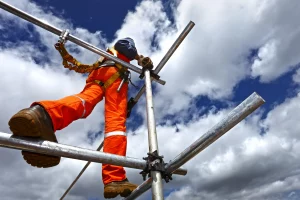
How can hazards associated with scaffolds be controlled?
This is a critical question for anyone involved in construction, renovation, or maintenance work.
Scaffolding plays an essential role in providing safe access to elevated areas.
However, without proper management, it can lead to serious accidents.
In this post, we delve into the common scaffolding hazards, explore effective control measures, and highlight how AM Scaffolding Yorkshire ensures safety across our services.
Whether you’re a homeowner planning a domestic project or a business managing industrial operations, understanding scaffold hazards is key to preventing incidents.
Have questions regarding hazards on your project? Get in touch now!
What Are the Hazards of Scaffolding?
Scaffolding, while indispensable, comes with inherent risks that can result in injuries or fatalities if not addressed.
These scaffolding risks arise from various factors, including design flaws, improper use, and environmental conditions.
Recognising these scaffold hazards is the first step towards implementing robust safety protocols.
Falls from Height
One of the most prevalent scaffolding hazards is falls from height.
Workers may slip due to unstable platforms, lack of guardrails, or adverse weather.
This risk is amplified in multi-level structures where even a minor lapse can have severe consequences.
Structural Collapse
What are the scaffolding hazards related to stability?
Scaffolds can collapse if overloaded, poorly assembled, or affected by ground shifts.
Inadequate foundations or substandard materials exacerbate this scaffold hazard.
Falling Objects
Tools, debris, or materials dropping from scaffolds pose significant scaffolding risks to those below.
Without proper netting or toe boards, this can lead to head injuries or worse.
Electrical Hazards
Proximity to power lines introduces electrocution risks, a common scaffold hazard in urban or industrial settings.
Contact with live wires during erection or use can be fatal.
Improper Access and Egress
Ladders or stairs that are not secured properly create access-related scaffolding hazards.
Workers climbing without safe entry points increase the likelihood of slips and falls.
Scaffold Hazards and Control Measures
Scaffold hazards and control measures go hand in hand for effective risk management.
To address how can hazards associated with scaffolds be controlled, a multi-layered approach is necessary.
This includes planning, training, and ongoing vigilance.
Let’s explore these in depth.
Comprehensive Planning and Design
Proper scaffolding design is foundational to controlling scaffold hazards.
Engage qualified engineers to create blueprints that account for load capacities, site conditions, and weather impacts.
Regular audits during the design phase can pre-empt common scaffolding hazards like instability.
Training and Competency
All personnel must receive thorough training on scaffolding risks.
Certifications such as CISRS ensure workers understand assembly, inspection, and safe usage.
Ongoing education reduces human error, a key factor in many scaffold hazards.
Regular Inspections and Maintenance
To control how can hazards associated with scaffolds be controlled, conduct daily inspections.
Check for wear, secure fittings, and environmental changes.
Tagging systems—green for safe, red for unsafe—help maintain awareness of potential scaffolding hazards.
Use of Personal Protective Equipment (PPE)
PPE like harnesses, helmets, and non-slip footwear is vital for mitigating falls and impacts.
Enforcing its use addresses multiple scaffold hazards and control measures.
Environmental Controls
Weather monitoring and site barriers control scaffolding risks from wind, rain, or ice.
For electrical scaffold hazards, maintain safe distances from power sources and use insulated tools.
Emergency Preparedness
Having response plans for incidents ensures quick action, minimising the impact of any common scaffolding hazards.
This includes first aid kits, evacuation procedures, and rapid dismantling if needed.
Services Provided by AM Scaffolding Yorkshire
At AM Scaffolding Yorkshire, we prioritise safety in every aspect of our operations.
Our services are tailored to meet diverse needs while controlling how can hazards associated with scaffolds be controlled.
With over 15 years of combined experience and accreditations like CISRS and ISO 9001, we deliver reliable solutions across Yorkshire.
Here’s a thorough breakdown of what we offer.
Emergency Scaffolding
Our emergency scaffolding service addresses urgent situations such as storm damage or structural issues.
We provide rapid response times, ensuring certified compliance to control immediate scaffolding hazards.
This includes quick erection for safe access during repairs, with fair rates that keep costs manageable.
Safety is embedded through expert assessments that prevent further scaffold hazards.
Domestic Scaffolding
For home projects like roofing or extensions, our domestic scaffolding offers secure platforms.
We focus on flexible scheduling and minimal disruption, prioritising security for workers and residents.
This service controls common scaffolding hazards through robust materials and regular checks, making it ideal for residential renovations.
Construction Scaffolding
In large-scale builds or infrastructure work, our construction scaffolding provides sturdy support.
We manage on-site efficiently with a comprehensive safety approach, addressing scaffolding risks like overloads.
Tailored to project scales, it ensures stability and compliance throughout.
Commercial Scaffolding
Businesses benefit from our commercial scaffolding for maintenance or facade works.
We minimise operational interruptions while enforcing thorough safety measures.
This controls scaffold hazards in busy environments, such as retail or office spaces.
Industrial Scaffolding
For heavy-duty needs in factories or power plants, our industrial scaffolding delivers custom designs.
Compliant and transparent, it facilitates safe access for inspections or shutdowns.
We control scaffolding hazards through heavy-duty materials and expert planning.
Edge Protection Scaffolding
Our edge protection scaffolding prevents falls in elevated areas like roofs or balconies.
Rapid installation ensures compliance, directly tackling a major scaffold hazard.
It’s essential for construction or maintenance where open edges pose risks.
Scaffolding Design
We offer expert scaffolding design, from sketches to CAD drawings.
This ensures structural integrity and efficiency, controlling how can hazards associated with scaffolds be controlled at the planning stage.
Our insights guarantee safe, optimised solutions for complex projects.
Best Practices for Ongoing Risk Management
Beyond initial setup, sustaining safety requires vigilance.
Integrate technology like digital inspection apps to track scaffold hazards.
Foster a culture of reporting near-misses to refine scaffold hazards and control measures.
Collaborate with firms like ours for audits that enhance control over scaffolding risks.
Frequently Asked Questions For Scaffolding Hazards & Control Measures
Q: What are the hazards of scaffolding in domestic projects?
A: In homes, key scaffolding hazards include falls, unstable access, and falling debris. Control them with secure guardrails, PPE, and professional erection.
Q: How can hazards associated with scaffolds be controlled in industrial settings?
A: Through custom designs, heavy-duty materials, and regular inspections, ensuring compliance with safety standards.
Q: What are some common scaffolding hazards related to weather?
A: Wind, rain, or ice can cause slips or instability. Monitor conditions and use weather-resistant features to mitigate these scaffolding risks.
Q: How do scaffold hazards and control measures apply to edge protection?
A: Edge protection directly prevents falls by installing barriers, a key measure for open elevated areas.
Q: What are the scaffolding hazards from improper training?
A: Lack of knowledge leads to assembly errors or misuse. Certified training is essential to control these scaffold hazards.
Resources For Yorkshire Scaffolding Services
Health and Safety Executive (HSE): The primary UK government body overseeing workplace safety, including scaffolding. Their scaffolding information page provides guidance on erection, dismantling, and safe practices.
GOV.UK Scaffolding Rules: Official government guidance on rules for erecting scaffolding on properties, including licensing, safety checks, and requirements for builders and scaffold companies.
Legislation.gov.uk – The Work at Height Regulations 2005: Key UK legislation outlining requirements for scaffolding assembly, dismantling, and alterations under competent supervision.
National Access & Scaffolding Confederation (NASC): The leading UK trade association for the scaffolding industry, providing definitive guidance like TG20:21 for tube and fitting scaffolds.
Construction Industry Training Board (CITB): Focuses on training and regulation for safe scaffolding practices through courses at the National Construction College (NCC).
EOSH UK (Environmental and Occupational Safety and Health UK): Offers scaffolding safety courses covering regulations, inspections, and hands-on training